Monday, August 29, 2011

Power Out

I'm in a location that suffered power outages from Hurricane Irene, so daily posts will resume when the power does. My weekly page will resume next week.

irene.jpg
[One of the many trees felled by Irene]

Friday, August 26, 2011

Today's archidose #521


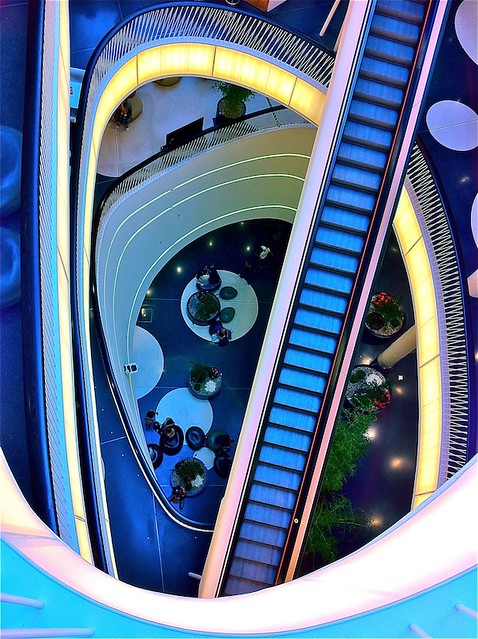
Hotel Mandarin Oriental
Hotel Mandarin Oriental, originally uploaded by Wojtek Gurak.

To contribute your Flickr images for consideration, just:
:: Join and add photos to the archidose pool, and/or
:: Tag your photos archidose

Wednesday, August 24, 2011

Half Dose #93: Jacob Burns Film Center Media Arts Lab

Photograph by  <br /> archidose
[Photographs by archidose; click for larger views.]

Yesterday I found myself in Pleasantville, a small village in Westchester County, about 30 miles north of New York City. Across the street from the Metro-North station is the Jacob Burns Film Center Media Arts Lab, just down the street from the Film Center's Theater. The two comprise, combined with a residence for international filmmakers, a campus for the "nonprofit educational and cultural institution dedicated to presenting the best of independent, documentary, and world cinema; promoting 21st century literacy; and making film a vibrant part of the community."

Photograph by archidose

The Media Arts Lab, which opened in 2009, is "home to dozens of filmmaking and cinema studies classes for kids, teens, adults, and families ... [in] a 27,000-square-foot state-of-the-art facility ... equipped with 16 editing suites, a recording studio, a soundstage, a 60-seat screening room, an animation studio, a large Center Studio, and four small studios." The building, designed by KG&D Architects, is capped by clerestories and a flat roof, yet the part of the design that drew may attention is the wood-slat exterior that gently curves around the corner. Horizontal strip lights are integrated into the slats to give the building a unique presence at night.

Photograph by  <br /> archidose

The building is basically rectangular, oriented north-south. The south elevation is above and the west elevation is below, with windows cut into the wood exterior, a decent way of bringing light into the offices while maintaining what is basically a continuous wood wall.

Photograph by archidose

To the east, where the main entrance is located, the wood slats give way to precast concrete panels. This makes the building somewhat schizophrenic, yet the clerestory and overhanging roof with wood eaves extend around the perimeter to unite the different sides.

Photograph by archidose

From the train station's parking lot across the street (photo below), the two parts of the building's design -- wood and concrete -- can be seen together. One can also see the solar panels and north-facing skylights on the roof.

Photograph by archidose

The site plan also shows -- as does this PDF presentation on the building's green merits -- the solar panels. We can also see a narrow green roof that follows the perimeter of the building's footprint. These are a few of numerous green features in a building focused on the "appreciation for natural beauty and conservation of resources."

Google Maps Aerial

Floor plan and section
[Floor plan and N-S section | Image source (PDF)]

Tuesday, August 23, 2011

Today's archidose #520

lookahs.jpg
Procession of the creative people of Lookahs (detail), by Catarina Bessell & Pedro Kok (2011), from Imaginable cities: tales from Saint Gertrudes. See large-size, overall image here.

To contribute your Flickr images for consideration, just:
:: Join and add photos to the archidose pool, and/or
:: Tag your photos archidose

Monday, August 22, 2011

Monday, Monday

My weekly page update:

This week's dose features Sauder School of Business in Vancouver, British Columbia, Canada by Acton Ostry Architects:
this       week's  dose

The featured past dose is Schulich School of Business in Toronto, Ontario by Hariri Pontarini Architects:
featured      past dose

This week's book review is Combinatory Urbanism: The Complex Behavior of Collective Form by Thom Mayne:
this week's book review

american-architects.com Building of the Week:

Marysville Getchell High School Campus in Marysville, Washington by DLR Group:
this week's Building of the Week

Some unrelated links for your enjoyment:
CultureGrrl
"Lee Rosenbaum's cultural commentary" at ArtsJournal. (Added to sidebar under Blogs » Culture.)

Designspiration
"A diverse selection of high quality, user-submitted images as a means of sharing inspiration." (Added to sidebar under Blogs » Design.)

vaMODERN
A blog created to "showcase and document architecture, art, and design throughout Virginia and into the extended Chesapeake Bay region." An interesting mix of stuff here. (Added to sidebar under Blogs » Architecture.)

Sunday, August 21, 2011

Today's archidose #519

Here is a slideshow of "a photographic essay on some fantastic and unreal usages of the Rolex Learning Center" in Lausanne, Switzerland by SANAA, 2010. Photographs are by Johann Watzke. See Half Dose #75 on the building.


To contribute your Flickr images for consideration, just:
:: Join and add photos to the archidose pool, and/or
:: Tag your photos archidose

Friday, August 19, 2011

Chuck Close on Prince Street

The other day my wife and I were talking about the artist Chuck Close's portraits, and ever since then he seems to be popping up. Yesterday it was in the Otherworldy show at MAD. And today it was while looking for something in the AIA Guide to New York City*. Between entries the Guide mentions a mural by Close on the side wall of 26 Prince Street, between Mott and Elizabeth Streets. Amazingly I've never noticed this mural, even though I've traversed this stretch of Prince Street many times. Where might Close pop up next for me?


View Larger Map

*Interestingly, I accidentally picked up an old edition of the Guide and stumbled across this bit on Close that isn't found in the latest edition.

Typography Trend

Or should that read,
Typo
graphy
Tr
end
See what I mean?

typo-trend.jpg
[L: Volume #27 | R: Combinatory Urbanism]

Thursday, August 18, 2011

Otherworldly

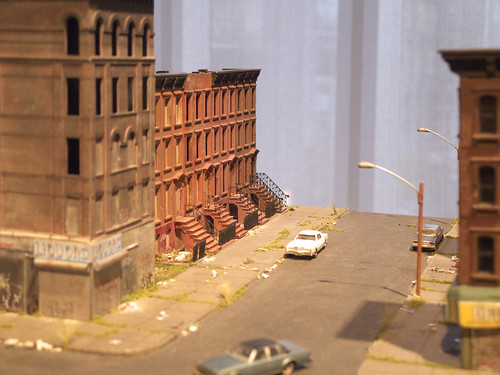
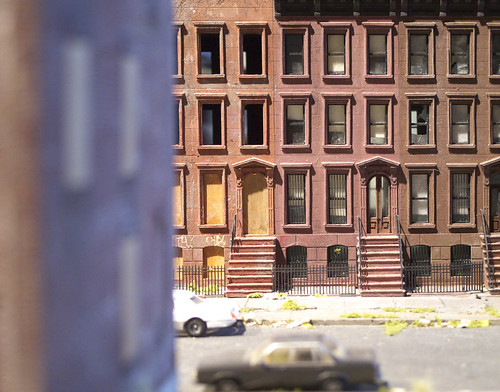
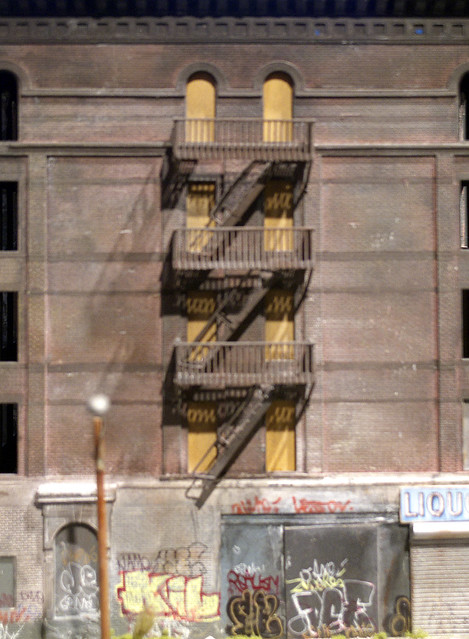
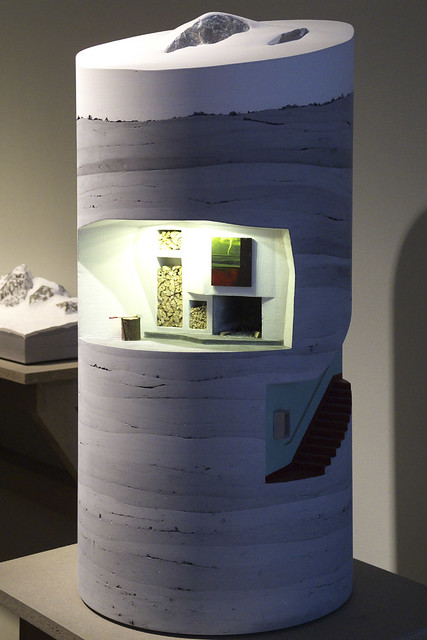
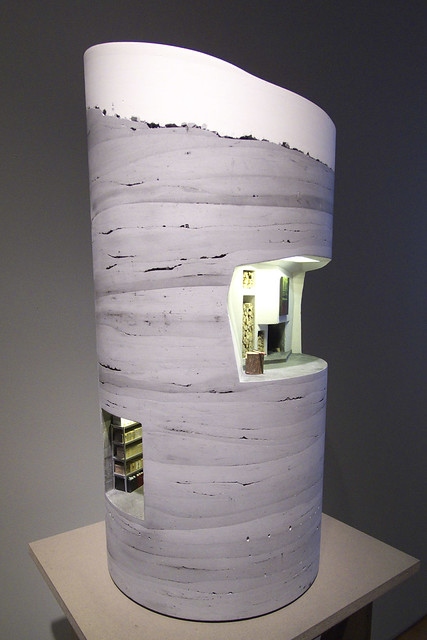
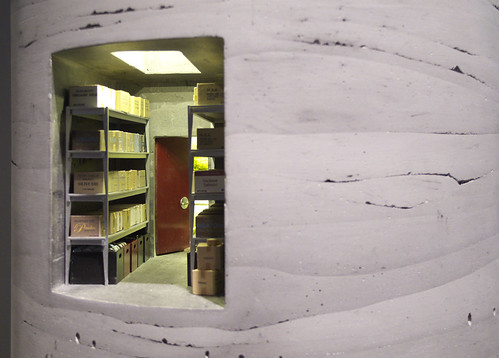
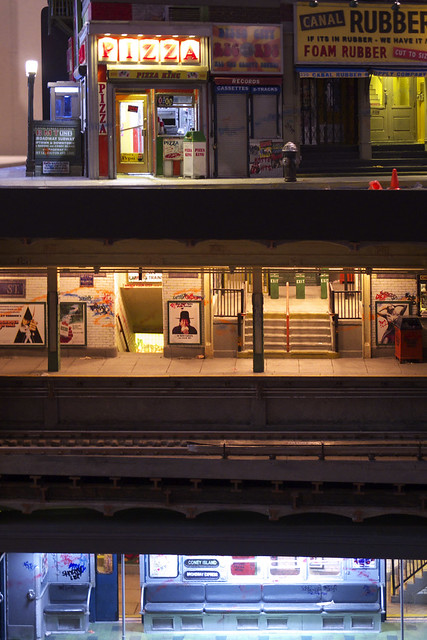
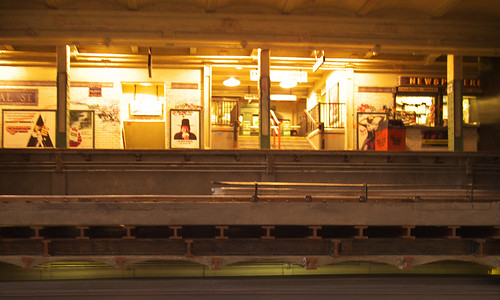
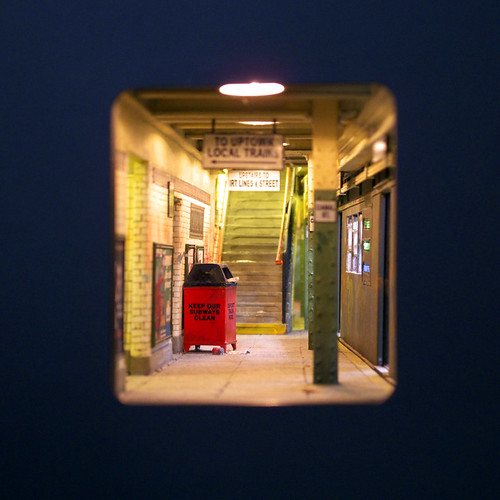
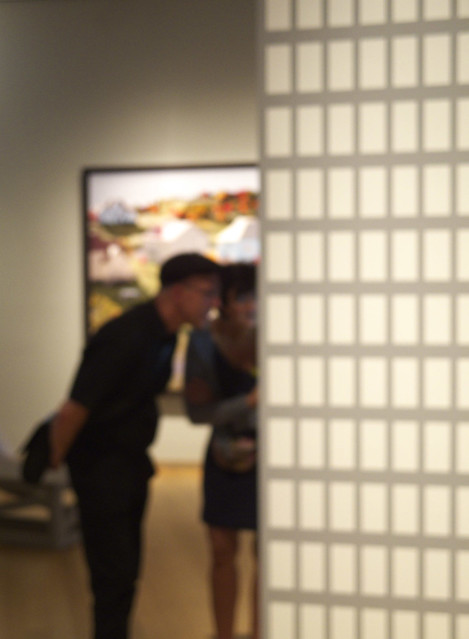
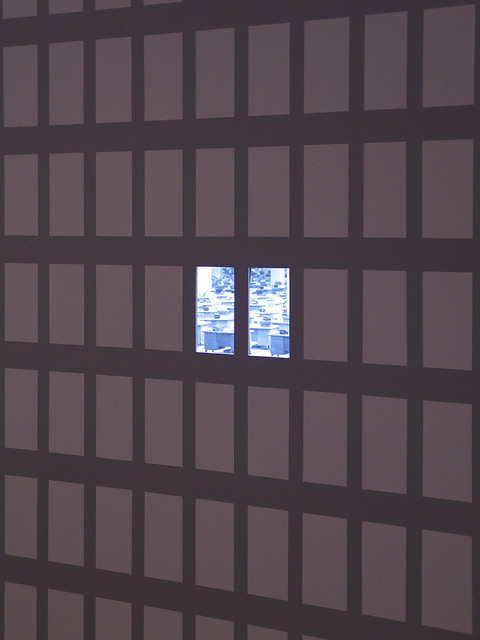
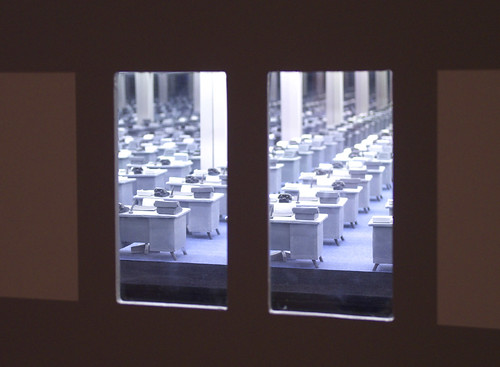
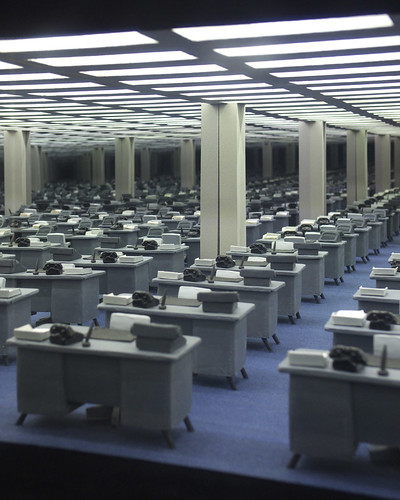
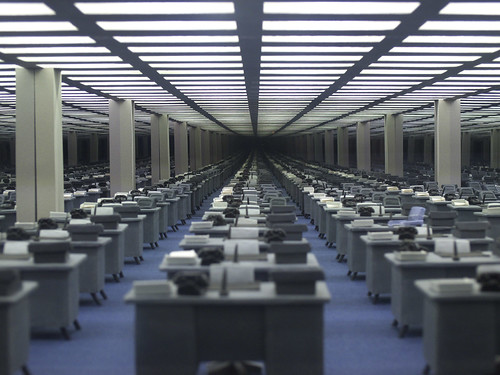
Yesterday I checked out the exhibition "Otherworldly: Optical Delusions and Small Realities" at the Museum of Arts and Design. Below are some highlights from this highly recommended show.

Transient Ghetto 2 by Peter Feigenbaum, 2009:
Transient Ghetto 2 by Peter Feigenbaum, 2009

Range Redoubt by Propeller Design, 2011:
Range Redoubt by Propeller Design, 2011

Canal St. Cross-Section by Alan Wolfson, 2009-2010:
Canal St. Cross-Section by Alan Wolfson, 2009-2010

Consolidated Life by David Lawrey and Jaki Middleton, 2010:
Consolidated Life by David Lawrey and Jaki Middleton, 2010

Wednesday, August 17, 2011

Architecture and Design Book Club

Pardon the short notice, but I just today learned about this event (via the Van Alen Institute's Facebook page) happening tomorrow evening. Sounds great to me, and I look forward to hearing what books will be discussed in the future.

First Architecture and Design Book Club, with Alexandra Lange
superscript_whyte.jpg
Superscript invites you to the first meeting of a new Architecture and Design Book Club, with our special guest architecture critic Alexandra Lange.

Join Superscript and architecture critic Alexandra Lange as we discuss the first selection of the Architecture and Design Book Club, William Whyte’s The Social Life of Small Urban Spaces. A seminal study of architecture and urban design, Whyte’s book offered New Yorkers and urban citizens everywhere new tools for looking at public space. His conclusions laid the foundation for legislation that turned this new understanding into common practice.

Superscript will be hosting the first edition of ADBC in a public venue fittingly celebratory of Whyte’s findings—The High Line. We invite you to just drop by—we will have portions of the text for you to refer to—and see today’s cityscape through Whyte’s eyes.

Guest: Alexandra Lange

Text: William Whyte, The Social Life of Small Urban Spaces
(we will provide photocopies of selections from the text)

Venue: 23rd Street Lawn, The High Line, Section Two

Date: Thursday, August 18, 2011

Time:
6:30pm Introduction
6:45-7:45pm Discussion, Q&A

Today's archidose #518

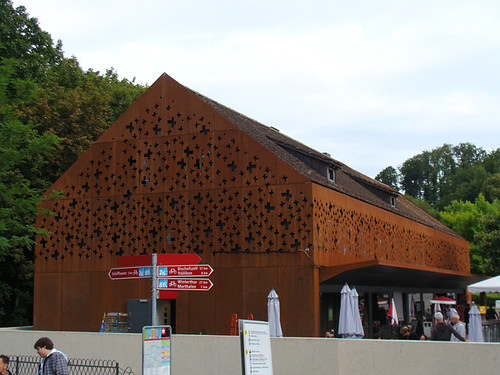
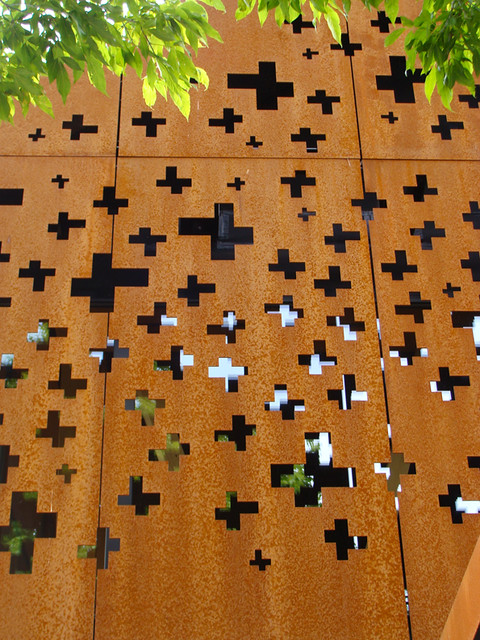
Here are a couple photos of the Visitor Center Rheinfall Schloss Laufen in Rheinfall, Switzerland by Leuppi & Schafroth Architekten, 2009. Photographs are by M. Correia Campos.

visitors center rheinfall schloss laufen, rheinfall, switzerland

detail, visitors center rheinfall schloss laufen, rheinfall, switzerland

To contribute your Flickr images for consideration, just:
:: Join and add photos to the archidose pool, and/or
:: Tag your photos archidose

Tuesday, August 16, 2011

And Now For Something Completely Different

Here are a couple videos by Architecture W.


NON_CARBON BASED LIFE FORMS
"We have been researching new sources of inspiration and have been looking at the wildly beautiful and slightly chaotic graphs created by HFT (High Frequency Trading programs) that permeate Wall Street.

We have been generating patterns and textures based on our findings and even were inspired to create a short documentary."


éphémère
"Portrait of a tree under [sic] a highway, home to a homeless man."

The New Age Steel

Please pardon the personal plug. This month's issue of Design Today, a magazine based out of India, features an article of mine on Cor-Ten steel in residential architecture. "The New Age Steel" is an extension of other things I've written on the distinctive material, namely a blog post here and an ideabook on Houzz. Looks like, along the lines of Jacob Javits Plaza in Lower Manhattan, I'm becoming a go-to-guy for this topic.

DT_Cover.jpg

Monday, August 15, 2011

Monday, Monday

My weekly page update:

This week's dose features Luxbau Office Conversion in Hainfeld, Austria by synn architekten:
this       week's  dose

The featured past dose is Malacca House in Malacca, Malaysia by SCDA Architects:
featured      past dose

This week's book review is Sketches: From Here and There by A.J. Diamond:
this week's book review

american-architects.com Building of the Week:

Twenty Five Lusk in San Francisco, California by CCS Architecture:
this week's Building of the Week

Some unrelated links for your enjoyment:

ARCHIcubed
"A global network that promotes Architecture and Design in their various forms and disciplines." (Added to sidebar under Architectural Links » Architect Profiles.)

American Suburb X
"An ever-growing archive and fiercely edited look at photography's massively relevant past, dramatically shifting present and always unfolding future." (Added to sidebar under Blogs » Art.)

Design Bureau
"Design Bureau gathers people like you—creative professionals, style arbiters and industry leaders—and connects you with a like-minded community of design enthusiasts across the world with one common idea: discovering great design and the people who make it happen." (Added to sidebar under Blogs » Design.)

Habitables
"A web magazine dedicated to providing a daily digest of the latest Architecture, Interior Design, Transport and Sustainability happenings." (Added to sidebar under Architectural Links » Online Journals.)

Sunday, August 14, 2011

Another Redesign

Dear readers,

I was getting tired of the light text on dark background, so I've switched to another Blogger template. Some tweaking needs to be done -- mainly to the sidebars, now left and right of the posts -- but I think the design is definitely easier on the eyes. In the future I may widen the posts in the middle to allow for larger images, among other changes.

Thanks,
John

Book Review: Three Books on Models

Architectural Modelmaking by Nick Dunn
Laurence King Publishing, 2010
Paperback, 192 pages

Model Making by Megan Werner
Princeton Architectural Press, 2011
Paperback, 160 pages

OASE #84: Models edited by Job Floris, Anne Holtrop, Hans Teerds and Krijn de Koning, Bas Princen (guest editors)
NAi Publishers, 2011
Paperback, 152 pages

book-models.jpg

Even as computer modeling and rendering grows in sophistication and usage in architectural schools and practice, models are still an important part of the design process and for presentations with clients and the public. Regarding the latter, it's been my experience that no matter how much time is spent on highly polished renderings for a meeting, the client will always gravitate towards the model, no matter how crude in comparison. Models have a tangibility that other presentation methods do not have; their multiple vantage points enable the discovery of unforeseen conditions that one-directional drawings may overlook; and their abstraction focuses attention on qualities of space and scale. As a part of the design process, they provide a fairly quick means of exploring different things, from the form of the overall building to a detail where two materials meet. Computer modeling may be more precise, but that can be a hindrance at times, and it may not yield the same discoveries that models allow. Ironically, as computer modeling becomes more sophisticated and is linked to machines like CNC routers, models can now be made with in even more ways, linked to information that is found in the computer. In this context, three recent books on architectural models attest to their lasting influence, giving architects and students alike some background on thinking and making.

At the beginning of the lavishly illustrated Architectural Modelmaking are some photos of architectural models in process -- including a huge OMA model and Antoine Predock putting the finishing touches on a clay model while on a plane en route to a meeting with the client -- that convey the role of study and presentation models but also the importance of their crafting. What follows is a mix of how-to manual and catalog of precedents. Though it leans towards the latter, with the descriptive captions that accompany the various illustrations, be they techniques, model photos, or completed buildings (the last is especially helpful to make the connection between model and full-scale result). The book is split into three sections: Media, including materials like paper, wood, steel, CAD/CAM; Types, be they concept models, massing models, presentation models, even full-size mock-ups; and Applications, such as explaining a design or testing part of it. The first is what the models are made from, the second is the model's reason for being (design study, a meeting, etc.), and the third is the designer's intention in what the model conveys and/or achieves. Interspersed throughout these chapters are techniques and case studies, but for the most part the latter is illustrative and the former is cursory. The book amasses a plethora of images that do a good job of conveying the variety of models available today with various techniques; looking through this book makes one optimistic of the state of architecture as expressed in model form.

Melissa Werner's Model Making, part of Princeton Architectural Press's Architecture Briefs series, reminds me of an old book I used to learn Photoshop; the software's well-known eye logo was shown in a manipulated form on the right side, and opposite were step-by-step directions on how to achieve that appearance. Werner, the founder of zDp Models, packs most of her book with "Concept Blocks," which are literal blocks of different materials and effects, as can be seen on the cover. Accompanying the photo of each block are materials, tools, tips and techniques, alternatives, concepts, and a photo of a sample model. The rest of the book expands on each of these, so one can flip to the back of the book to learn more about, for example, basswood, a Dremel, CNC milling (one way computer technology has created a resurgence in model building), how to bend materials, and so forth. It's a concise and straightforward how-to reference with helpful photos and illustrations, and it benefits from the apples-to-apples presentation of the concept blocks. More documentation of the sample models would have been helpful, as this appendix features the same photo at the same size as that which accompanies the relevant concept block, with architect, materials, scale, and a little bit more information of interest. Given that the concept blocks are a means to an end, not the end itself, it would be helpful, especially for students, to get a better picture of those results, which can combine materials and methods in unexpected ways.

On a more theoretical spectrum than the first two books is number 84 of OASE, an independent, international journal in Dutch and English featuring architecture, urban design and landscape design, with each issue focused on a particular theme. As the editors indicate in their introduction, the term models does not solely apply to scale models of full-size buildings, either realized or soon-to-be built. Six pairs of articles are grouped into three "observations": models can lead to unexpected discoveries divorced from the eventual building, if any; models have been an engine of change in recent architectural discourse; and models are important for a number of contemporary artists. Illustrations of each can be respectively found in John Hejduk's Wall House studies, OMA's iconic unbuilt competition projects in the 1990s, and Thomas Demand's photos of often mundane architectural spaces. Each is explored in the pages of OASE #84, as well as numerous other subjects historical and contemporary. What results are varied accounts of the role of the model in architecture and art; all, to a greater or lesser degree, acknowledge the role of the imagination in the abstract fictions that are created. Academic without being obtuse, the articles further elucidate what it is about models that makes them so popular and lasting, even as digital renderings continue their ascendancy.

Architectural Modelmaking:
US: Buy from Amazon.com CA: Buy from Amazon.ca UK: Buy from Amazon.co.uk

Model Making:
US: Buy from Amazon.com CA: Buy from Amazon.ca UK: Buy from Amazon.co.uk

OASE #84:
US: Buy from Amazon.com CA: Buy from Amazon.ca UK: Buy from Amazon.co.uk

Thursday, August 11, 2011

Today's archidose #517

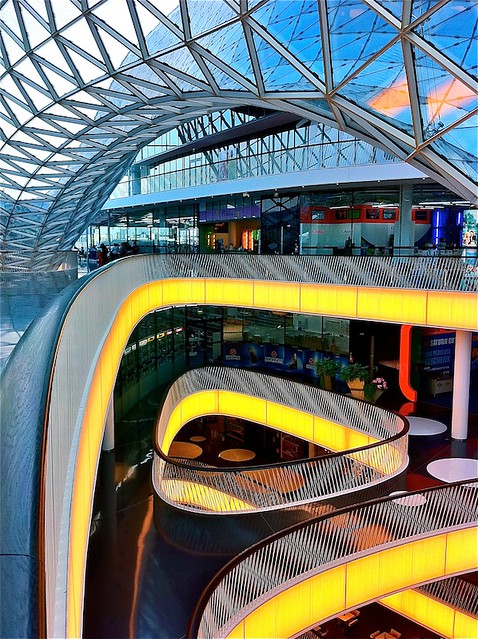
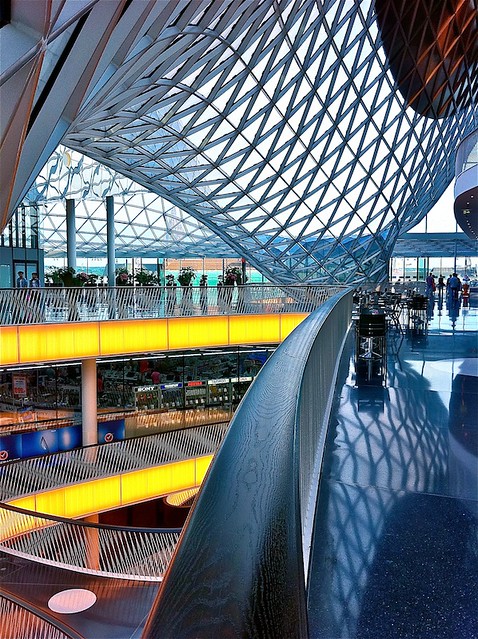
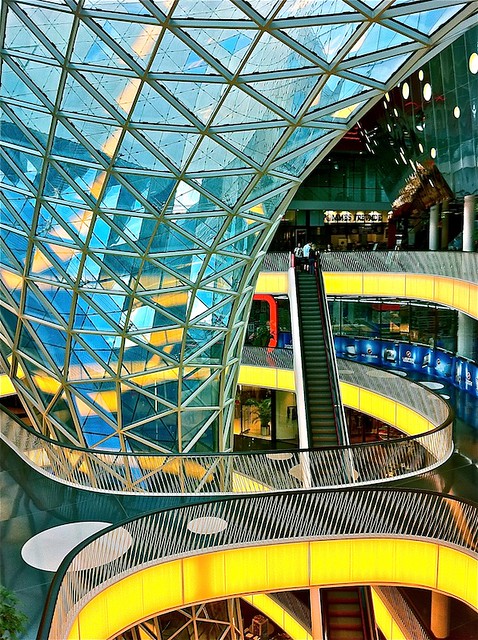
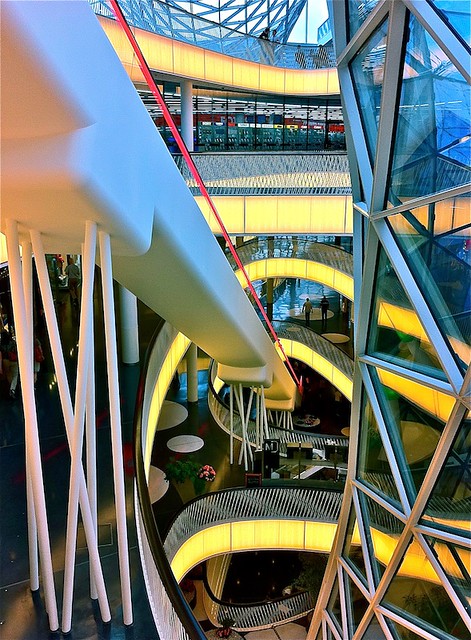
Here are some photos of MyZeil Shopping Mall in Frankfurt, Germany by Massimiliano Fuksas Architetto, 2009. Photographs are by Ken Lee 2010.

MyZeil, Frankfurt, Germany

MyZeil, Frankfurt, Germany

MyZeil, Frankfurt, Germany

MyZeil, Frankfurt, Germany

MyZeil, Frankfurt, Germany

To contribute your Flickr images for consideration, just:
:: Join and add photos to the archidose pool, and/or
:: Tag your photos archidose