Thursday, March 31, 2011

Permanent Change: Plastics in Architecture and Engineering

Today and tomorrow I'm attending the Permanent Change: Plastics in Architecture and Engineering conference at Columbia GSAPP. With wifi access I can get some work done and post some highlights from the proceedings, cursory tidbits that serve to spark my memory, but which should also give people a sense of what is being presented and discussed. I'll add at least one thing of interest from each session below, updating it as the conference progresses.

Day 2, Session 4:
118_1succulenthouse.jpg
[Succulent House by Murmur; a house with udders for collecting water | featured in a talk by Sylvia Lavin on flaccidity and "an orgy of plastics." | image source]

http://www.archidose.org/Blog/e000996640_e.html.jpg
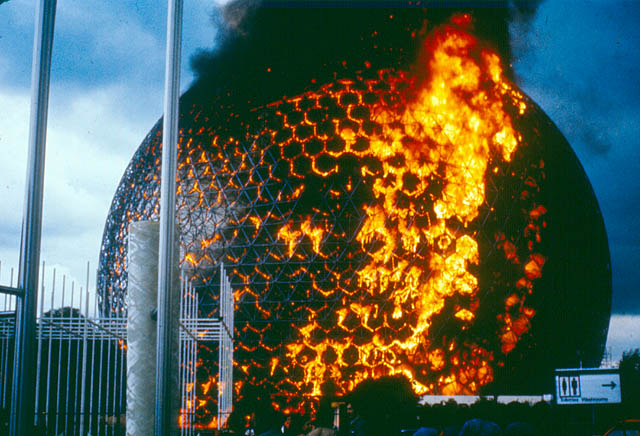
[U.S. Pavilion at Expo67 in Montreal by R. Buckminster Fuller, catching fire in 1976; it was rebuilt years later without the acrylic skin | in Mark Wigley's talk on plastic drawing the line between inside and outside, architects' ignorance of plastics, and the end of the material's Sixties/Seventies' exploration in architecture | image source]

Temporary Cinema no. 01
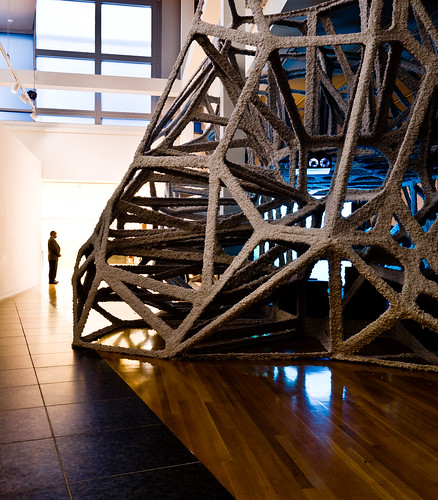
[Temporary Cinema installation by MOS and artist Tobias Putrih at the Wexner Center | one of many recent MOS projects presented by Michael Meredith and Hilary Sample | photo by Samuel Ludwig on flickr]

Day 2, Session 3:
PurkinjeCell.jpg
[Neurological drawing by Santiago Ramón y Cajal | in lecture by Sanford Kwinter on neuroplasticity | image source]

The Predator by Fabian Marcaccio
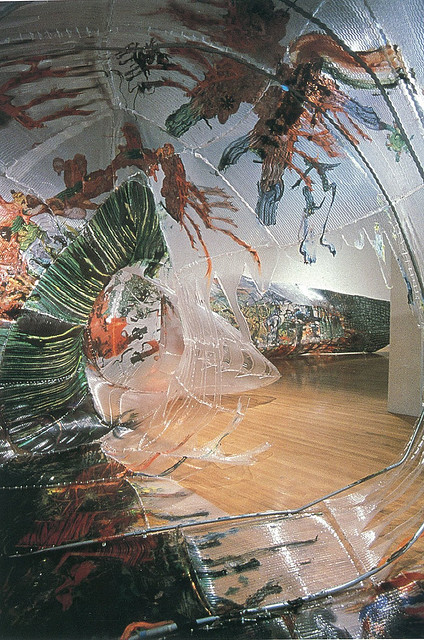
[The Predator, a "painting" by Fabian Marcaccio and Greg Lynn | presented by Fabian Marcaccio | photo by virtuejofern on flickr]

H_muscleZ.jpg
["Hybrid Muscle," one of many fascinating projects by R&Sie(n); here the covering is made up of elastomer sheets | presentation by Francois Roche | image source]

Day 2, Session 2:
BanksideModel5.png
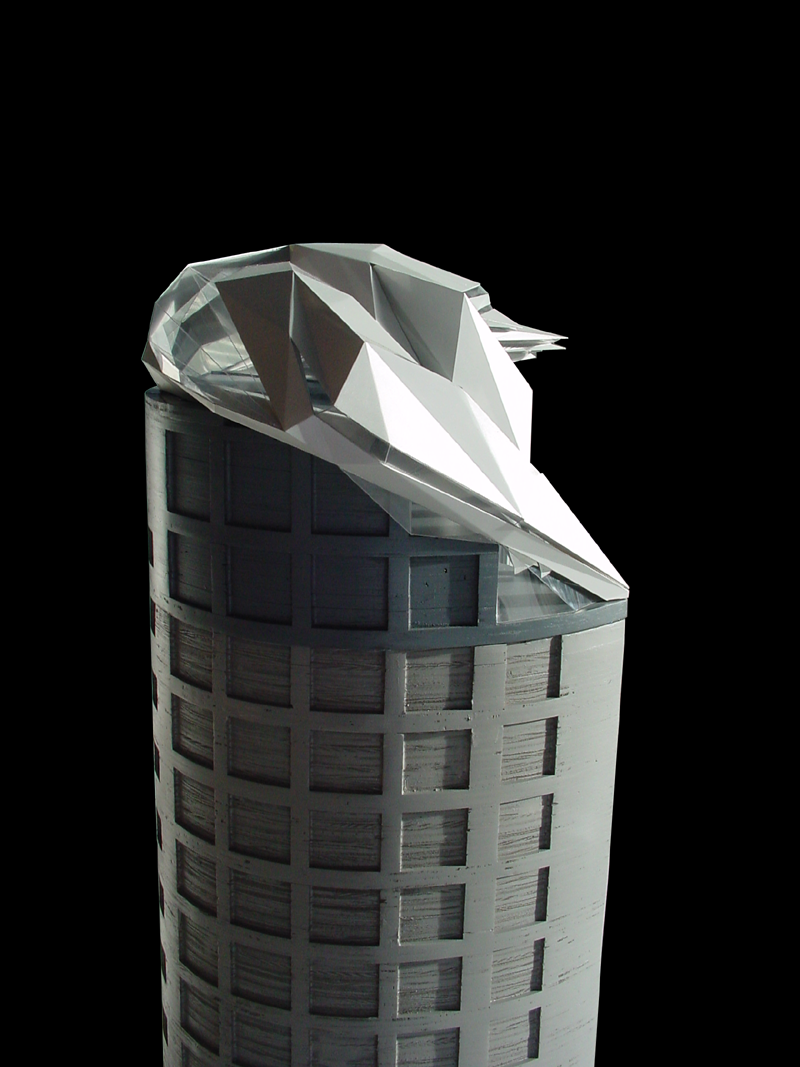
[Bankside residential penthouse near the Tate in London, by Decoi Architects; wall panels are being fabricated of carbon fiber | presented by Mark Goulthorpe | image source]

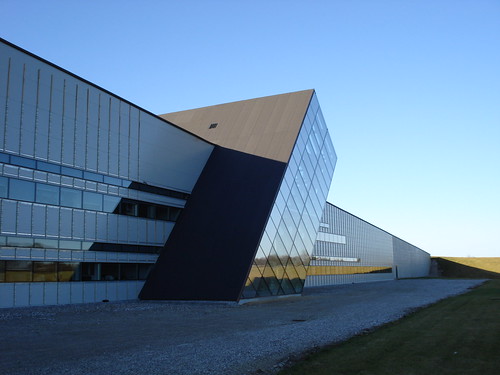
Fiberline, Denmark
[Fiberline Building in Middlefart, Denmark by Jan Søndergaard/KHR; Fiberline makes composite fiber profiles, and the building is an expression of their pultrusion process | part of Ignaas Verpoest's presentation on composites | photo by winn1ke on flickr]

Day 2, Session 1:
Hafencity Hamburg, Unilever head office Germany, Strandkai quarter
[Unilever HQ by Behnisch Architects; the facade is a double wall with the outer surface of stretched ETFE | in presentation by Erik Olsen of Transsolar | photo by Kai Nicolas Schaper on flickr]

Day 1, Session 4:
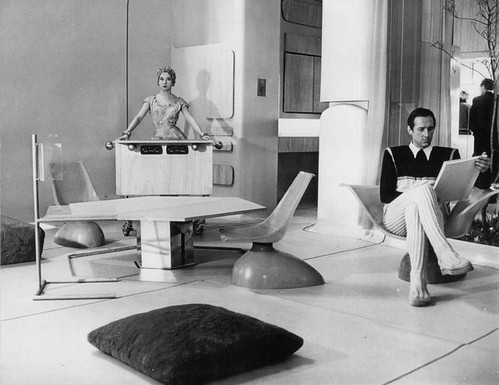
House of the Future
[House of the Future, 1956, by Alison and Peter Smithson, boasted as an all-plastic house, but built of plywood With a thin layer of plastic applied to it | in Beatriz Colomina's talk, which also included SANAA's installation at the Barcelona Pavilion | photo by Andrés E. on flickr]

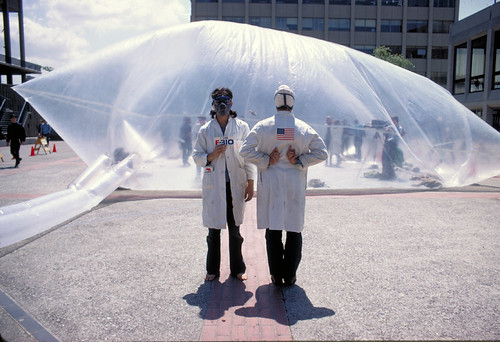
F-310
[Ant Farm inflatable event on Earth Day, 1970 | part of Chip Lord's rundown of the art/architecture group's history | photo by edsel2007 on flickr]

Day 1, Session 3:
media_image_5470.jpg
[3Di composite laminate sails | presented be William Pearson of North Sails One Design | photo from North Sails web page]

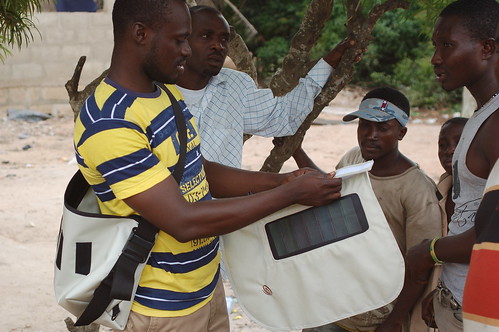
FLAP Bags: With Henry Addo doing interviews in Accra
[FLAP portable solar bag by Portable Light | presented by Sheila Kennedy | photo by whiteafrican on flickr]

AMPSProto2.jpg
[Active Phytoremediation Wall System by CASE Rensselaer/SOM | presented by CASE's Anna Dyson | photo from atelier nGai's web page]

inflatable_tank.jpg
[An inflatable decoy tank | one of many uses for plastics explored in Galia Solomonoff's presentation | photo via Strange Harvest]

Day 1, Session 2:
New Camera Tests-100101-10
[The plastic (not aluminum) facade of the Walbrook by Foster + Partners | In presentation by Jan Knippers | photo by simontoplis on flickr]

2008-02-01_19-40-31
[The decaying plastic art of Duane Hanson | Discussed in Craig Konyk's "The plastic paradox and its potential" | photo by waorak on flickr]

Day 1, Session 1:
Monsanto House Construction '56
[Monsanto House of the Future | Presented by Theodore H.M. Prudon | photo by "Dennis Claremont" on flickr]

Wednesday, March 30, 2011

Oeuvre Kaput?

Over at Architectural Record, Martin Filler asks, "Is the architect's monograph our latest endangered species?" His wording "architect's" is very precise, as he rightly points out that "monographs on contemporary firms are heavily subsidized or wholly underwritten by their subjects." Or to put it another way, they are not monographs on architects, they are monographs by architects. Yes, Le Corbusier fashioned his own Oeuvre Complete -- including the layout -- between 1929 and 1970, yet it would be hard-pressed to compare today's  monographs to Corbu's influential eight-volume series.

oeuvre.jpg


So, to use Filler's words again, are succeeding monographs "little more than glossy hardcover promotional brochures to entice an uninformed and impressionable lay clientele?" Not all of them, of course. As a way to state what monographs can offer in the way of quality presentation and worthwhile writing, below are some choice post-S,M,L,XL (another important title also mentioned in the article) monographs. I'd certainly acknowledge that other monographs are as good or better, but I've limited the selections to my own library, since the book's physical nature is so important to its appreciation. Also memory can be misleading, so revisiting the below titles reinforced their qualities while removing others from consideration. So here's my top ten (something I've wanted to do for a while but needed an excuse for) in order of publication date.

monograph2.jpg
Intertwining by Steven Holl | Princeton Architectural Press | 1996 | Amazon
Steven Holl's second monograph, spanning works from 1989 to 1995, cannot be thought of as a standalone book; it is really an extension of Anchoring, his extremely popular first monograph from 1988. They share a square format, linen covers, a consistent layout, and Holl's polemical writing that mapped out the ideas that still shape his architecture. He's produced many books since these two, but it wasn't until 2009's Urbanisms that all of these characteristics returned.

monograph5.jpg
Wiel Arets: Strange Bodies by Bart Lootsma | Birkhäuser | 1996 | Amazon
This large-format (12" square) yet slender (114 pages) monograph on Dutch architect Wiel Arets is a careful assemblage of drawings, photographs, and text. The first, the architect's signature graphite perspectives, are few but often full-page; the second, by Kim Zwarts, are mainly black-and-white, with an emphasis on the dark tones; the third is consistently across the top of each page, like a ticker in Dutch and English, with essays by Stan Allen, Elizabeth Diller, Ben Van Berkel and Caroline Bos, Kenneth Frampton, and others. This book is also personally significant, for the architect gave it to me after a trip to the American Midwest in my college days.

monograph9.jpg
Peter Zumthor Works: Buildings and Projects, 1979-1997 by Peter Zumthor | Lars Müller Publishers | 1999 | Amazon
Is this monograph really that good, or does its inclusion here stem from the steep prices this out-of-print title fetches? It's not easy to separate the price from the contents, but I think the appeal stems from Zumthor's mystique more than the book itself. Regardless, the monograph embodies simplicity and consistency in presentation, with minimal text and large photographs by Hélène Binet, most in black and white. It's not really worth the inflated prices, but it's a delight for those enamored with Zumthor's architecture.

monograph1.jpg
Clark and Menefee by Richard Jensen | Princeton Architectural Press | 2000 | Amazon
This book's small format, combined with the black-and-white photos and simple drawings throughout, goes hand in hand with the modest designs of W.G. Clark and Charles Menefee. Writings by Clark accompany Jensen's descriptive text. The book is out of print and hard to find.

monograph4.jpg
Shigeru Ban by Matilda McQuaid | Phaidon | 2003 | Amazon
Shigeru Ban is known best for structures made from cardboard tubes (a monograph devoted to his "paper in architecture" was released in 2009), a material requiring numerous tests before being implemented in Japan and elsewhere. Some of those technical tests are gathered here, as well as others on bamboo, wood, and prefab construction. Without these gray pages inserted between projects the book would be a fairly standard monograph; with them it gives insight into practice that other titles, regardless of architect, tend to omit.

monograph7.jpg
Glenn Murcutt: A singular practice by Haig Beck and Jackie Cooper | Images Publishing Group | 2003 | Amazon
Like the monograph on Shigeru Ban above, this one on Australia's Pritzker Prize winner benefits from the supplemental material, the sketches and working drawings by Murcutt that comprise the book's third section. These range from concept sketches to plans and details. In the project section of the book, the photos and more sketches/drawings are accompanied by text by both the authors and Murcutt, something that makes me wonder why more monographs don't do the same. At the start of the book are essays by the three contributors, including a walk through Murcutt's working process via sketches and drawings that is particularly illuminating.

monograph6.jpg
Herzog & de Meuron: Natural History edited by Philip Ursprung | Lars Müller Publishers | 2003 | Amazon
This book hardly resembles a traditional glossy monograph, the main reason being that it accompanies an exhibition at the Canadian Centre for Architecture. In both exhibition and book insight is given into the Swiss super duo's working process over their completed buildings, via a presentation of sketches, study models, and related artifacts. Glossy sections alternate with heavyweight matte paper (at least in the hardcover copy I have), the latter used for essays and interviews. It's ironic, and refreshing, that a book without color photos of completed buildings would give the reader such a great understanding of their architecture.

monograph10.jpg
Renzo Piano Building Workshop: Complete Works, Vol. 4 by Peter Buchanan | Phaidon | 2003 | Amazon
Renzo Piano's career is treated like Le Corbusier, with monograph following monograph. If any contemporary architect is deserving of this it is Piano, whose output is varied and marked by significant commissions that coincide with the sequential titles. At the heart of Volume 4 is the Tjibaou Cultural Centre, a masterpiece in New Caledonia. This and the other titles (now at 5 volumes) are highlighted by thorough documentation and top notch writing.

monograph3.jpg
Yes Is More by Bjarke Ingels Group | DAC/Taschen | 2009 | Amazon
The subtitle of BIG's monograph is "an archicomic on architectural evolution," and that's exactly what it is. A comic book with diagrams, renderings, photographs, and Mr. Ingels inserted into many of the "cells" works to explain their projects better than a traditional monograph format could have. Other architects might be inspired to adopt a comic format, but they'll probably realize that while it's appropriate for BIG it probably won't work for them.

monograph8.jpg
small projects by Kevin Mark Low | ORO Editions | 2010 | Amazon
The name of this book is also the name of Kevin Mark Low's architectural practice. The Malaysian architect creates modern-day spaces in the spirit of Arts & Crafts, designing and fabricating pieces like stairs, furniture, and even dish racks. As I said in my review, "Low's sense of craft and control extends to this monograph, which he also designed and set, dealing with everything from fonts to page size and layout." It follows the traits of the glossy monographs that Filler alludes to, without the gloss and with a thorough documentation and control that it becomes a good precedent for a way forward.

And a few runners-up:

Graphic Anatomy by Atelier Bow-Wow | Toto | 2008 | Amazon
Sverre Fehn: The Pattern of Thoughts by Per Olaf Fjeld | Monacelli Press | 2009 | Amazon
Tadao Ando 1: Houses and Housing by Tadao Ando | Toto | 2008 | Amazon
Unprecedented Realism: The Architecture of Machado and Silvetti by K. Michael Hays | Princeton Architectural Press | 1996 | Amazon

Tuesday, March 29, 2011

Book Review: Travels in the History of Architecture

Travels in the History of Architecture by Robert Harbison
Reaktion Books, 2010
Hardcover, 288 pages

book-harbison.jpg

Histories of architecture are quite a particular bunch. Known by their authors -- Trachtenberg and Hyman, Sir Banister Fletcher -- the large-format and heavily illustrated books chronologically trace major buildings in Western history, from Egypt to Post-Modernism. Geared primarily to architecture students, these and other textbook-like histories take an art-historical approach to cataloging and describing buildings based on aesthetic and formal grounds. So Greek architecture is looked at in terms of the orders and proportions; Roman architecture, the arch; Gothic architecture, groin vaults and flying buttresses, and so forth. These are incomplete histories that ignore that developments are not always linear, skipping decades or more. They also play down the social, economic, political (minus important leaders and clients), and other contextual factors that influence architecture and its many forms.

As I started Robert Harbison's compact book on the history of architecture, it sounded like he was writing the anti-history, taking the opposite position of the above books to create an idiosyncratic though no less understandable presentation of architecture's past; small instead of big, lesser known buildings instead of masterpieces, nonlinear instead of chronological. But shortly after the book's first sentence a more subtle tactic is presented: "Perhaps I simply hope to rewrite the canon, not to topple it, perhaps only (some of the time at least) to give new reasons for the inclusion of the same old monuments." Having read a few of Harbison's books previously (Eccentric Spaces; The Built, the Unbuilt, and the Unbuildable; Thirteen Ways; all recommended), I didn't think this would be a bad thing. His insight and prose, rooted in experience and the articulation and expression of it, paint vivid pictures of places and present unexpected points-of-view. His vertiginous description of ascending into the dome of St. Paul's in London comes to mind.

Like the histories of Trachtenberg & Hyman and Fletcher, Harbison starts in Egypt, and he ends with Deoncstruction. Also similar are the chronology of the chapters and the focus on Western architecture, mostly Western Europe. Yet a chronology in the vein of Romanesque beget Gothic, Renaissance beget Mannerism, is questioned in the writing, looking at original sources, other histories, and first-hand experience. In the case of the last -- which informs the focus on Western Europe, where Harbison has traveled most and knows best -- sometimes unexpected details come to the fore rather than the architectural elements we've learned to appreciate elsewhere. It is these moments of elucidating a style or movement from canonical works that stand out in Harbison's "rewriting."

US: Buy from     Amazon.com CA: Buy from     Amazon.ca UK: Buy from     Amazon.co.uk

Today's archidose #485

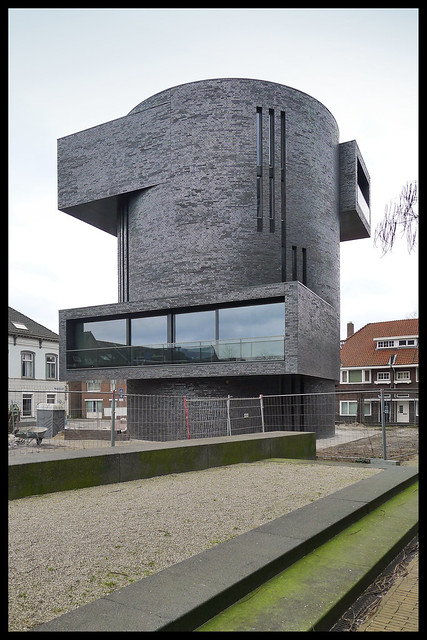
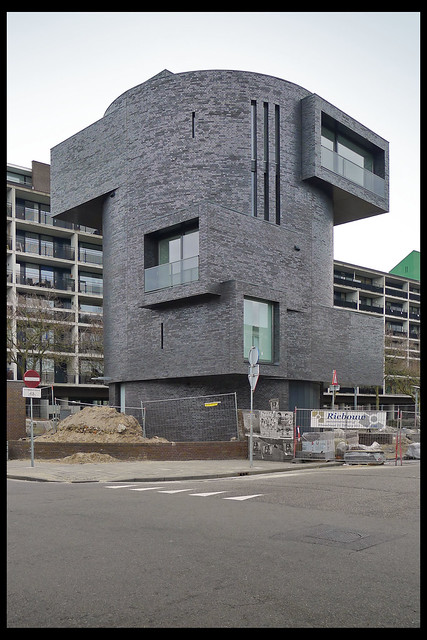
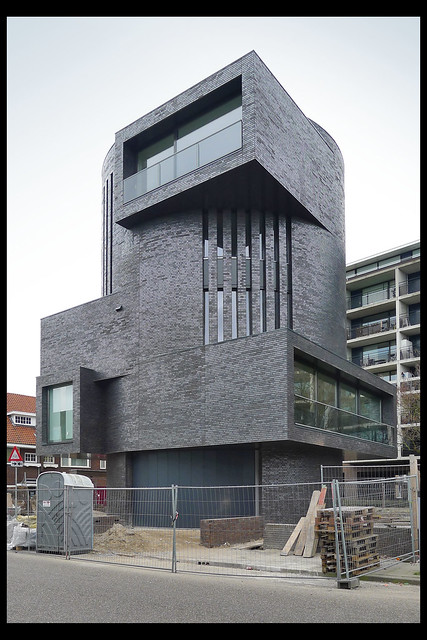
Here are three views of a Double House in Tilburg, Netherlands by Bedaux de Brouwer Architects, 2011.Photos are by Klaas5.

tilburg dubbelwoning zwijsenstr 01 2011 bedaux de brouwer (zwijsenstr)

tilburg dubbelwoning zwijsenstr 07 2011 bedaux de brouwer (zwijsenstr)

tilburg dubbelwoning zwijsenstr 05 2011 bedaux de brouwer (zwijsenstr)

To contribute your Flickr images for consideration, just:
:: Join and add photos to the archidose pool, and/or
:: Tag your photos archidose

Monday, March 28, 2011

Eduardo Souto de Moura wins Pritzker Prize

Note: links and photos will be added to the text below as they become available on the Pritzker Architecture Prize page; see bottom of post for results of informal poll posted on this blog.

Beginning of Press Release:

Portuguese Architect Will Be Presented
the 2011 Pritzker Architecture Prize
in Washington, D.C.

pritzker2011-1.jpg

Los Angeles, CA—Eduardo Souto de Moura, a 58 year old architect from Portugal, is the jury’s choice for the 2011 Pritzker Architecture Prize, it was announced today by Thomas J. Pritzker, chairman of The Hyatt Foundation which sponsors the prize. The formal ceremony for what has come to be known throughout the world as architecture’s highest honor will be in one of Washington, D.C.’s finest classical buildings, the Andrew W. Mellon Auditorium on June 2.

In announcing the jury’s choice, Pritzker elaborated, "This marks the second time in the history of the prize that a Portuguese architect has been chosen. The first was in 1992 when Alvaro Siza was so honored."

The purpose of the Pritzker Architecture Prize, which was founded in 1979 by the late Jay A. Pritzker and his wife, Cindy, is to honor annually a living architect whose built work demonstrates a combination of those qualities of talent, vision and commitment, which has produced consistent and significant contributions to humanity and the built environment through the art of architecture. The laureates receive a $100,000 grant and a bronze medallion.

Pritzker Prize jury chairman, The Lord Palumbo, spoke from his home in the United Kingdom, quoting from the jury citation that focuses on the reasons for this year’s choice: "During the past three decades, Eduardo Souto de Moura has produced a body of work that is of our time but also carries echoes of architectural traditions." And further, "His buildings have a unique ability to convey seemingly conflicting characteristics — power and modesty, bravado and subtlety, bold public authority and a sense of intimacy —at the same time."

pritzker2011-2.jpg
["Casa das Artes", S.E.C. Cultural Centre, Porto, Portugal, 1981-1991 | Photo by Luis Ferreira Alves]

As a student, Souto de Moura worked for Alvaro Siza for five years. Since forming his own office in 1980, Souto de Moura has completed well over sixty projects, most in his native Portugal, but he has designs in Spain, Italy, Germany, United Kingdom and Switzerland. The projects include single family homes, a cinema, shopping centers, hotels, apartments, offices, art galleries and museums, schools, sports facilities and subways.

His stadium in Braga, Portugal was the site of European soccer championships when it was completed in 2004, and gained high praise. Nearly a million and a half cubic yards of granite were blasted from the site and crushed to make concrete for the stadium. Precise explosions of a mountain side created a hundred foot high granite face that terminates one end of the stadium. Souto de Moura describes this coexistence of the natural with the man made construction as good architecture. In his own words, "It was a drama to break down the mountain and make concrete from the stone." The jury citation calls this work, "...muscular, monumental and very much at home within its powerful landscape."

pritzker2011-3.jpg
[Braga Stadium, Braga, Portugal, 2000-2003 | Photo by Luis Ferreira Alves]

Another of his projects, the Burgo Tower, completed in 2007, constructed in the city where he lives and works, Porto, Portugal, is described by the jury as, "...two buildings side by side, one vertical and one horizontal with different scales, in dialogue with each other and the urban landscape." Souto de Moura commented that "a twenty story office tower is an unusual project for me. I began my career building single family houses."

pritzker2011-4.jpg
[Burgo Project in Boavista Avenue (Office Blocks
and Commercial Mall), Porto, Portugal, 1991-2007 | Photo by Christian Richters]

Souto de Moura has designed numerous residences, one of which, House Number Two built in the town of Bom Jesus, was singled out by the jury for its "uncommon richness throughout the subtle banding in the concrete of its exterior walls." Souto de Moura’s comments on the project: "Because the site was a fairly steep hill overlooking the city of Braga, we decided not to produce a large volume resting on a hilltop. Instead, we made the construction on five terraces with retainer walls, with a different function defined for each terrace-- fruit trees on the lowest level, a swimming pool on the next, the main parts of the house on the next, bedrooms on the fourth, and on the top, we planted a forest."

pritzker2011-5.jpg
[House in "Bom Jesus", Braga, Portugal, 1989-1994 | Photo by Luis Ferreira Alves]

Another project in his native city, Porto, is the Cultural Center completed in 1991, which the jury describes as "a testament to his ability to combine materials expressively." He used copper, stone, concrete and wood.

A convent and monastery in a mountainous terrain near Amares, Portugal, called Santa Maria do Bouro was a project for Souto de Moura from 1989 to 1997, in which he converted the centuries old structure into a state inn. He recalls the walls were over four feet thick. Originally built in the 12th century, the jury declares in their citation that Souto de Moura “has created spaces that are both consistent with their history and modern in conception.”

pritzker2011-6.jpg
[Conversion of the Santa Maria do Bouro Convent into a State Inn, Amares, Portugal, 1989-1997 | Photo by Luis Ferreira Alves]

Souto de Moura, in describing another of his projects, has said, "After the painter Paulo Regio chose me as her architect, I was lucky to be able to choose the site. It was a fenced off forest with some open space in the middle. On the basis of the elevation of the trees, I proposed a set of volumes of varying heights. Developing this play between the artificial and nature helped define the exterior color, red concrete, a color in opposition to the green forest. Two large pyramids along the entrance axis prevent the project from being a neutral sum of boxes." The Paulo Regio Museum completed in 2008, is cited by the jury as "both civic and intimate, and so appropriate for the display of art."

pritzker2011-7.jpg
[Paula Rêgo Museum - Cascais, Portugal, 2005-2009 | Photo by Luis Ferreira Alves]

Often described as a "Miesian architect," the jury acknowledged this influence with the words, "He has the confidence to use stone that is a thousand years old or to take inspiration from a modern detail by Mies van der Rohe."

Upon learning that he was being honored, Souto de Moura had this reaction: "When I received the phone call telling me I was to be the Pritzker Laureate, I could hardly believe it. Then I received confirmation that it was actually true, and I came to realize what a great honor this is. The fact that this is the second time a Portuguese architect has been chosen makes it even more important."

The distinguished jury that selected the 2011 Pritzker Laureate consists of its chairman, The Lord Palumbo, internationally known architectural patron of London, chairman of the trustees, Serpentine Gallery, former chairman of the Arts Council of Great Britain, former chairman of the Tate Gallery Foundation, and former trustee of the Mies van der Rohe Archive at the Museum of Modern Art, New York; and alphabetically: Alejandro Aravena, architect and executive director of Elemental in Santiago, Chile; Carlos Jimenez, professor, Rice University School of Architecture, principal, Carlos Jimenez Studio in Houston, Texas; Glenn Murcutt, architect and 2002 Pritzker Laureate of Sydney, Australia; Juhani Pallasmaa, architect, professor and author of Helsinki, Finland; Renzo Piano, architect and 1998 Pritzker Laureate, of Paris, France and Genoa, Italy; and Karen Stein, writer, editor and architectural consultant in New York. Martha Thorne, associate dean for external relations, IE School of Architecture, Madrid, Spain, is the executive director of the prize.

In addition to the previous laureates already mentioned, the late Philip Johnson was the first Pritzker Laureate in 1979. The late Luis Barragán of Mexico was named in 1980. The late James Stirling of the United Kingdom was elected in 1981, Kevin Roche in 1982, Ieoh Ming Pei in 1983, and Richard Meier in 1984. Hans Hollein of Austria was the 1985 Laureate. Gottfried Böhm of Germany received the prize in 1986. Robert Venturi received the honor in 1991, and Alvaro Siza of Portugal in 1992. Christian de Portzamparc of France was elected Pritzker Laureate in 1994. Frank Gehry of the United States was the recipient in 1989, the late Aldo Rossi of Italy in 1990. In 1996, Rafael Moneo of Spain was the Laureate; in 1997 the late Sverre Fehn of Norway; in 1998 Renzo Piano of Italy, in 1999 Sir Norman Foster of the UK, and in 2000, Rem Koolhaas of the Netherlands. Australian Glenn Murcutt received the prize in 2002. The late Jørn Utzon of Denmark was honored in 2003; Zaha Hadid of the UK in 2004; and Thom Mayne of the United States in 2005. Paulo Mendes da Rocha of Brazil was the Laureate in 2006, and Richard Rogers received the prize in 2007. Jean Nouvel of France was the Laureate in 2008. In 2009, Peter Zumthor of Switzerland received the award. Last year, two Japanese architects were honored, partners Kazuyo Sejima and Ryue Nishizawa of SANAA, Inc.

The field of architecture was chosen by the Pritzker family because of their keen interest in building due to their involvement with developing the Hyatt Hotels around the world; and because architecture was a creative endeavor not included in the Nobel Prizes. The procedures were modeled after the Nobels, with the final selection being made by the international jury with all deliberations and voting in secret. Nominations are continuous from year to year with hundreds of nominees from countries all around the world being considered each year.

The site for this year’s ceremony, the Andrew W. Mellon Auditorium was erected between 1932 and 1934, and is part of a large nine-building office complex called the Federal Triangle. At the time of its construction, it was the largest government owned assembly space in the city, and considered as one of the most magnificent settings for government ceremonies. It was designed by San Francisco based architect Arthur Brown, Jr. Originally called the Departmental Auditorium, it was renamed in 1987, the Andrew W. Mellon Auditorium.

End of Press Release

Results of informal poll hosted on this blog in March, 2011:

Monday, Monday

My weekly page update:

This week's dose features House in Hieidaira, Japan by Thomas Daniell Architects:
this       week's  dose

The featured past dose is M House in Nagoya, Japan by architecture w:
featured      past   dose

This week's book review is Matter in the Floating World by Blaine Brownell:
this week's book    review

american-architects.com Building of the Week:

Warroad Land Port of Entry in Warroad, Minnesota by Julie Snow Architects:
this week's Building of the Week

Some unrelated links for your enjoyment:
#Architecture
An edited selection of architecture-related posts on Tumblr.

Center for an Urban Future
"A public policy organization dedicated to improving the overall health of New York City and serving its long-term interests by targeting problems facing low-income and working-class neighborhoods in all five boroughs." (added to sidebar under architectural links::organizations)

Home Dsgn
"An online blog focused on Interior Design and Inspirational Contemporary Homes." (added to sidebar under blogs::architecture)

Life at the Speed of Rail
"The Van Alen Institute calls on the international design community to envision the cultural, environmental and economic impact of a new rail network." Deadline is May 21, 2011.

This Hideous House
"Your house is so ugly we don't dare show the inside!" On Facebook. (added to sidebar under blogs::architecture)

Sunday, March 27, 2011

Today's archidose #484


Granoff Center , originally uploaded by Bryan Chang.

Perry and Marty Granoff Center for the Creative Arts at Brown University in Providence, Rhode Island by Diller Scofidio + Renfro, 2011. Coverage of the building can be found all over the place, including the New York Times, Architect Magazine, and Arch Daily.

To contribute your Flickr images for consideration, just:

:: Join and add photos to the archidose pool, and/or

:: Tag your photos archidose

Saturday, March 26, 2011

QuaDror

At Design Indaba in February Dror Benshetrit unveiled QuaDror, "a new space truss geometry that unfolds manifold design initiatives and can adapt to various conditions and configurations." I was a bit hesitant to hop on the media bandwagon in the ensuing weeks, mainly because I have a hard time believing that a new structural system could just come into being now, after centuries of progress (why not already?), and I'm not a fan of products labeled with the designer's name. Regardless, after letting the initial hype die down I took a look at it QuaDror and find it appealing for its simplicity and open-ended applications. At first glance it's a mix of Bucky Fuller and IKEA, the former's triangulated structures and the latter's popular flat-pack characteristic. Seeing the movement of some of the prototypes in Dror's demonstration, I'm also reminded of the genius-folding-engineer Erik Demaine.

dror1.jpg
[QuaDror - Rotomolded Wall | image source]

According to the literature on QuaDror, the system has been in development for four years, since 2006 when "experimenting in the workshop, Dror discovered a serendipitous geometry." Traces of the interlocking L-shaped pieces formed into a three-dimensional sawhorse-like configuration can be seen in his entry to the Contemplating the Void exhibition at the Guggenheim about a year ago.

dror2.jpg
[Guggenheim Wall | image source]


Like any design innovation, heralded or not, its implementation will be the most sure sign of QuaDror's worth. Depending on material and size of the pieces, anticipated uses include interior dividers, noise barriers, roadway supports, disaster relief structures, and even building frames. The system has the possibility of being simultaneously structure and porous skin. Perhaps its biggest detriment is the source of its strength: the 43-degree angle formed by the leaning pieces in a wall configuration make it a hard fit with furnishings, be it 90-degree furniture or even paintings. In this sense its insertion into the rotunda of Frank Lloyd Wright's Guggenheim Museum is apt; that space is celebrated for its architecture, but it frustrates curators trying to insert exhibitions on or in front of leaning and curving walls.